March 25, 2010

I Can't Get No Satisfaction


For my conclusion on Metamorphoses, I feel that one song can describe my understanding of the characters and stories. Satisfaction. This is what makes Metamorphoses brilliant. All the characters in the book/play aren't satisfied with what they have and are looking for something else. This makes all the stories possible. As I was reading, almost every character had many things, but they weren't satisfied with what they had; they needed even more. If it weren't for the character's greed these stories wouldn't be possible. Some have a happy ending, but others are more of a tragedy.

The first story in the play is about Midas, the perfect example of not being satisfied with what you have. He had a lot of money, and didn't need any more, but he wasn't satisfied; he wanted more. His wish of turning everything into solid gold shows that he wanted more gold to increase his wealth. If he was happy with what he had, he wouldn't have lost his daughter, but the story wouldn't have been told.

The second character who isn't satisfied with what he has is Ceyx. He has Alcyone who completes him, but he wants more. "Ceyx: My love, I hate to choose between my journey and you but how can I live this way? Stranded on shore, afraid, domesticated, diminished, a kind of lap dog?" Alcyone wasn't enough satisfaction for Ceyx.

I could go on on how wanting more made the stories possible, but I feel that I need to write about Metamorphoses' teachings. Every story has a moral. Metamorphoses reminded me of Aesop's Fables because after every story there was a teaching. This teaching was represented in a transformation, thus the name Metamorphoses.

Also, you can't read Metamorphoses and not mention anything about the Greek gods. The gods are in every story, doing what they please with human beings. What I like the most about Greek mythology is the connection between human beings and the gods. The gods are involved in human affairs, and they can communicate. There is a god for any type of story. There is a huge variety of characters that can add to the story.

I really enjoyed reading Metamorphoses. Not only was it entertaining, but there were many teachings. Since I am very interested in Greek mythology, I enjoyed the Mary Zimmerman's interpretation of Metamorphoses.

March 23, 2010

Can I have the Keys?


What is every teenager's dream? The keys to his dad's car. No matter what type of car his father owns, every adolescent wants to drive it. It doesn't matter if the car is a Chevrolet or a Ferrari or even the Sun God's chariot. Phaeton wasn't en exception. After his father Apollo promised him a favor, Phaeton asked him for permission to drive the chariot. Of course, driving the chariot around the world isn't appropriate for young Phaeton, but a promise is a promise. After Apollo reluctantly gave him permission came the warnings. "up in the sky there are the bull and the lion and the scorpion...Don't fly too high...Go slantwise...". Like any other teenager, warnings are gibberish. And just as Apollo predicted, Phaeton does everything wrong. There is nothing Phaeton can do to make things right.

Apart from being a very entertaining story, I connected this story with my father for a couple of reasons. One of them refers to a situation my father lived just like Phaeton. He also wanted the keys to my grandfather's car to drive off to a party in some place. Back then, my grandfather would rather die than let anybody use his car. My father took the car because my grandfather was away, and he didn't do much better than Phaeton. A trucked crashed the car. Luckily, my father survived, but the car's fate was different. My grandfather almost killed my father when he had to pay the bills for the accident.

Apart from crashing a parent's car, the story also reminded me of my father's teachings. In the story, Apollo tells Phaeton that he won't be able to the job, but Phaeton is certain driving the chariot is a walk in the park. I learned from my father that, if he warns me about something, it's for a reason. I don't question my father's warning because I know that he knows more things than I do.

March 20, 2010

Love is not Enough


The story of Alcyone and Ceyx is one of the most beautiful love stories ever written. What could be more romantic than going off to sea looking for adventure, while the woman who loves you is counting the days that pass after your departure. Even though this might be a great story, the characters' stupidity bothered me. Alcyone made two strikes in the story. First of all, he had the perfect woman for him. Alcyone loved him more than anything in the world. "if you die my life is over and I shall be cursed with every reluctant breath I draw." She's definitely a keeper. How can you abandon someone who cares about you so much to wander off to sail the seas.

Apart from leaving his loyal wife, she also warned him about the dangers in the sea. That's Ceyx strike two. "Once they've escaped my father's cave, those winds are wild and beyond anyone's control. As a girl I watched them come home exhausted and spent, and i learned to fear them them. Now I am petrified," Poseidon's own daughter just told him what would happen to him, and who would know better than his own daughter. Instead of heeding Alcyone's warnings, Ceyx departs on his journey, and just like Alcyone predicted, he dies in a storm.

Even though Ceyx made two strikes, Aphrodite then makes a home-run that wins the match, because Alcyone and Ceyx are transformed into birds, and live happily ever after. This is the transformation in the story, it is not only the physical transformation into birds, but Ceyx's transformation inside as well. Ceyx understands that he had everything he ever wanted, and didn't need adventures to find it. Alcyone was what Ceyx wanted, and his understanding transformed his life.

The other love story in Metamorphoses that amazed me was the story of Orpheus and Eurydice. Unlike Ceyx, I felt pity for Orpheus. After he lost his wife because of a snake bite, he traveled to the underworld to recover his love. She was released under the condition that she would travel behind him, but he couldn't look back to check if she was really there. He did turned, and lost her forever. I found Orpheus to be a really interesting character, he was a daring musician, and he did his best to recover Eurydice. When he turned around and checked to see if Eurydice was there, he lost everything he had done. That stressed me out, I imagined he he must have felt, but I don't think I got close to a fraction of what he felt. So far, this story has been my favorite.

March 15, 2010

Man's Eternal Greed


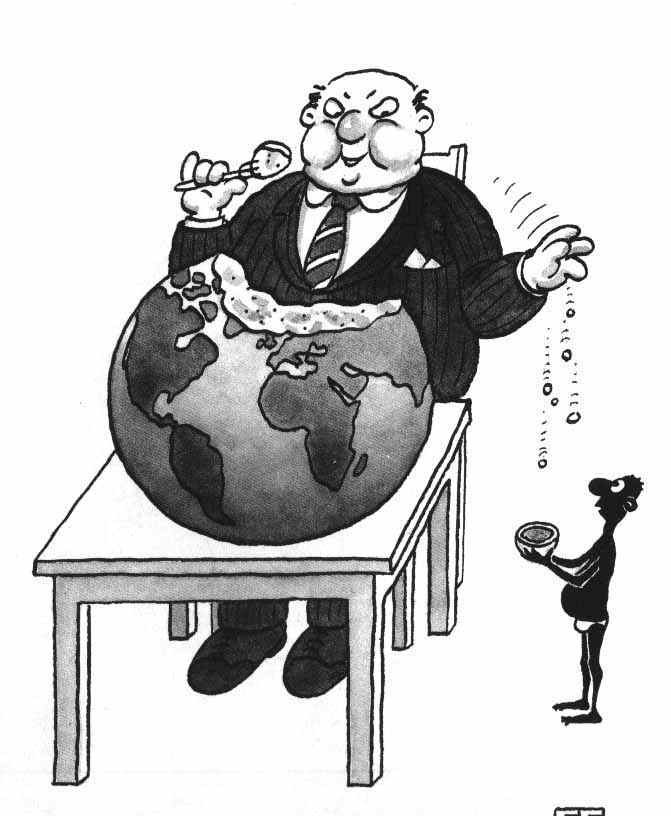
Metamorphoses, one of the most famous stories is the story of King Midas. King Midas is a very greedy person, nothing is enough,and he wants everything. He is very rich, but when he gets a wish he wants more. What would be the perfect wish if all you care about is money? Well, make everything you touch turn into money. The famous Midas Touch; he wished that anything he touched turned into solid gold. This might have seemed like a good idea at the start, but something as crazy as that can only go wrong. Because of his "Touch", Midas turned his own daughter into solid gold!

What I took out from this story was how greed can damage your life. Humanity was born with an enormous defect, enough is never enough. We always want more than what we have, and sometimes we are willing to do anything. Gambling is a perfect example of a greedy activity. Risking what you have for more shows that you are not satisfied with what you have, and chances are that you can lose everything for wanting even more.

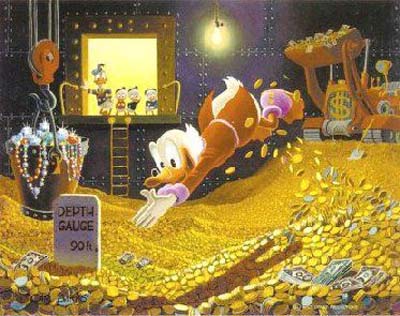
Every time I hear the word greed, I get a mental image. That picture that tickles my brain is, the lovable Scrooge McDuck. I was raised by Duck Tales which is probably one of the greatest cartoon shows ever made. Anyways, Scrooge McDuck was the richest duck in Duckberg,and he always wanted to find a way to make money by finding treasures, investing on factories, and making an island filled with dinosaurs a type of Jurassic Park. In the end, the money didn't make Scrooge happier, it was the love of his beloved nephews, Huey, Dewey, and Louie. He was happy with what he already had. (Duck Tales Intro)

The transformation in the story of King Midas for me was Midas' understanding of greed. He learned that greed can destroy your life the hard way. At the start of the story, he can't stop rambling about money. In the end, he wants to give it all away.

March 14, 2010

Creation


Metamorhposes begins with the very beginning. The book written by Ovid starts with the creation of our planet. They way the creation is described is very similar to the theories of other religions, and some scientists. "Before there was earth or sea or the sky that covers everything, Nature appeared the same throughout the whole world: what we call chaos: a raw confused mass, nothing but inert matter, badly combined discordant atoms of things, confused in the one place." (Book I:1-20 The Primal Chaos). Ovid and the scientists who believe in the Big Bang Theory agree. Scientists believe that before the Big Bang, the whole universe was in one small nugget. What followed is where scientists and Ovid disagree. In the Big Bang, there was a huge explosion (what a surprise), and in Metamorhposes a god created Earth. This part is the one that agrees with many religions such as Catholicism. Catholics believe that God created the universe, just like Ovid.

The beauty of Ovid's theory is that it combines religion and science. "I want to speak about bodies changed into new forms. You, gods, since you are the ones who alter these, and all other things, inspire my attempt, and spin out a continuous thread of words, from the world's first origins to my own time." This is the very first sentence of Metamorhposes, which shows us that Ovid believes in a polytheistic religion. "Earth, heavier than either of these, drew down the largest elements, and was compressed by its own weight. The surrounding water took up the last space and enclosed the solid world." (Book I:21-31 Separation of the elements). Ovid's theory of creation has a term that deals with elements, and makes sense. This is extraordinary because of the book's age. This theory originated thousands of years ago. It has the characteristics of a more recent theory because it combines science and religion.