May 23, 2010

Jesus According to St. Mark


After drifting off the Bible to read the Analects and the Tao Te Ching; we are back with the New Testament. Time for Jesus according to Mark. The Gospel According to Saint Mark doesn't start with Jesus' birth which actually surprised me. Maybe he couldn't find enough information, so he just skipped it. Jesus' birth is probably described by Mathew, Luke, or John. Mark focuses on Jesus' adult life. I already knew the general story, but I had never learned it with this much detail.

Jesus was actually a celebrity in his time! Everywhere he went the people welcomed him, like fans. His 12 disciples where his entourage. I'm not saying Jesus was like Mark Whalberg; he did more than an HBO series. Where Jesus went he performed miracles. People loved him, he had huge fans. One of the most remarkable miracles is feeding five thousand people:

"This is a desert place, and now the time is far passed: 36 Send them away, that they may go into the country round about, and into the villages, and buy themselves bread: for they have nothing to eat. 37 He answered and said unto them, Give ye them to eat. And they say unto him, Shall we go and buy two hundred pennyworth of bread, and give them to eat? 38 He saith unto them, How many loaves have ye? go and see. And when they knew, they say, Five, and two fishes. 39 And he commanded them to make all sit down by companies upon the green grass. 40 And they sat down in ranks, by hundreds, and by fifties. 41 And when he had taken the five loaves and the two fishes, he looked up to heaven, and blessed, and brake the loaves, and gave them to his disciples to set before them; and the two fishes divided he among them all. 42 And they did all eat, and were filled. 43 And they took up twelve baskets full of the fragments, and of the fishes. 44 And they that did eat of the loaves were about five thousand men." (Mark 6:36)

No wonder Jesus had so many fans. Jesus was worthy enough to have fans. Miley Cirus has millions of fans, and she only sings and acts. Jesus could cure leprosy, cure a deaf person (hence the first Wet Willy), and feed thousands of people. No wonder he was more influential than Miley Cirus.

Based on what Saint Mark said, Jesus was definitely the son of God. He was not only a miracle worker, he was also very wise. He used short stories for his teachings called parables. I read many parables in preparation for my first communion, but I didn't really understand the message. This is one parable Jesus used to convey his message:

"1 And he began to speak unto them by parables. A certain man planted a vineyard, and set an hedge about it, and digged a place forthe winefat, and built a tower, and let it out to husbandmen, and went into a far country. 2 And at the season he sent to the husbandmen a servant, that he might receive from the husbandmen of the fruit of the vineyard. 3 And they caught him,and beat him, and sent himaway empty. 4 And again he sent unto them another servant; and at him they cast stones, and wounded himin the head, and sent him away shamefully handled. 5 And again he sent another; and him they killed, and many others; beating some, and killing some. 6 Having yet therefore one son, his wellbeloved, he sent him also last unto them, saying, They will reverence my son. 7 But those husbandmen said among themselves, This is the heir; come, let us kill him, and the inheritance shall be ours. 8 And they took him, and killed him,and cast himout of the vineyard. 9 What shall therefore the lord of the vineyard do? he will come and destroy the husbandmen, and will give the vineyard unto others. 10 And have ye not read this scripture; The stone which the builders rejected is become the head of the corner: 11 This was the Lord’s doing, and it is marvellous in our eyes?" (Mark 12:1)

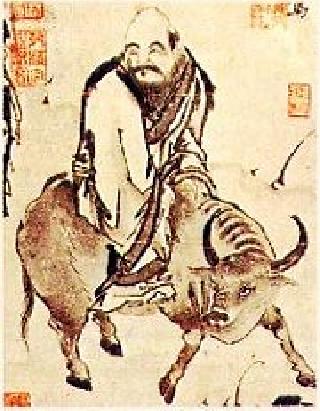
Jesus reminded me of Lao Tzu and Confucius because of his wise teachings, but I give Jesus more merit. Unlike Lao Tzu and Confucius, Jesus didn't write his teachings; he as a doer. Jesus went personally to the people to offer his knowledge. The gospels the saints wrote are the teachings of Jesus. That is the basic difference between the Analacets and the Tao Te Ching. The gospel isn't Saint Mark's teachings, it's what he knows about Jesus' teachings. I don't remember reading about St. Mark meeting Jesus, so I think he had to do research to write the gospel. That also makes me doubt the authenticity of what happens in Jesus' adult life.

Even though the gospel was written to teach about Jesus' life and his wisdom, there is an entertaining story. This differs from the Tao Te Ching, because I felt that the Tao Te Ching was a list of teachings while this gospel had a story along the teachings. When you read you have to focus on the little things that include the teachings, because someone might only see the big picture which is the story almost everyone knows about Jesus. Even though there is very few scientific proof of the story of Jesus that is told, it is a great work of literature that has influenced millions of people for hundreds of years.

May 17, 2010

Government and Paradox


The end of the Tao Te Ching seemed to focus a lot on government. Unlike most of the text, it was very clear and straightforward. The whole book was written with paradoxes. The paradoxes made the book a riddle, and made the text somewhat confusing at my first glance. For example:
"In the pursuit of learning, every day something is acquired.
In the pursuit of Tao, every day something is dropped." (Chapter 48)

At the end, Lao Tzu focused on the qualities a leader should have to rule in a successful type of government. I think he took special care in making this section very clear so that the next leader that read the Tao Te Ching could understand quickly what he needed to know.
"When the country is ruled with a light hand
The people are simple.
When the country is ruled with severity,
The people are cunning." (Chapter 58)

This was very clear for me. It didn't take me very much to decode the meaning of what Lao Tzu said. I also think that he wanted to prove that he could be an excellent leader. Like any other political candidate before the elections, he was showing his ideals to convince people. If he had been a political candidate, he would have my vote. His ideas are logical and wise. Because of the wisdom he uses with his ideas, I infer that Lao Tzu was a leader. To have such a clear idea of what an ideal leader would be, he must have experience. I doubt the Tao Te Ching was political propaganda. For me it was special feature, because he drifts a little away from the Tao.

In the end the Tao Te Ching was a guide to reach the Tao. The way Lao Tzu wrote left me with the impression that only people that really wanted to follow the Tao could understand it. If you really don't want to learn anything from this book, you could read it once and forget about it. If you really want the full meaning, you can spend time and actually learn something. You don't have to want to follow the Tao to learn something useful from the book. It also helped me to develop a skill in reading comprehension because there are hidden meanings behind every word. I actually enjoyed this reading better than the Bible and the Analects. This is a book that everyone should read.

May 10, 2010

Tao Te Ching


Tao Te Ching and the Analects are teachings that guide the way to live our lives. After just reading 1-12, I felt the emptiness of the Ten Commandments. Ten seems like a very small number to teach the way life should be lived. What amazes me even more is that the Tao Te Ching around the 6th century BC, and almost every sentence can apply to modern life. Not only what is said impresses me, but how it is said marked me even more.

Before reading a text as important as the Tao Te Ching, I did some background research to understand what I was reading. The Tao Te Ching just like the Analects; was written in China by a philosopher, this time Lao Tzu. There are many terms that have the same name as in the Analects, but the Tao Te Ching and the Analects differ. First of all, they have a different author, which means different ideas. Even though they have different ideas, their ideals are very similar. Both talk highly about working hard for nothing in return, and respect for elders and family.

Both the Analects and the small part of the Tao Te Ching are books that guide religion in Asia. For many people, the Ten Commandments would be their guide. After reading these books, ten seems like a very small number. Every sentence written in the Tao Te Ching is like a commandment for me. The philosophers go deeper with each "commandment." The Tao Te Ching and the Analects may be shorter than the Bible, but every sentence is about a page long. I had to reread the entire text many times to get the complete understanding of what was said. I also had my useful friend, the Merriam Webster Online Dictionary.

Another aspect of the Tao Te Ching that I would like to write about, is how it fits to modern life. The book is thousands of years old, but everything can apply to modern life.
"In dwelling, live close to the ground.
In thinking, keep to the simple.
In conflict, be fair and generous.
In governing, don't try to control.
In work, do what you enjoy.
In family life, be completely present."

Everything said by the Master is true. I think that the Tao Te Ching and the Analects should be read by many people. I'm not telling people to convert their religion, but people from all races and religions should read these books for knowledge.

Confucius' Teachings

The Truth?

The Bible is the guide to life for many people. Many generations were raised by the teachings of the Book of Genesis. Now that there are scientific advancements, people doubt the authenticity of the Bible. Every day, more people lose faith because of loose ends. Evolution is probably the theory that has caused the most issues with people losing faith. Evolution conflicts with the Book of Genesis; and evolution has more followers each day.
Before there were significant scientific advancements that explained the origin of mankind, people looked for the Bible for answers. The Bible explains the creation of man with God as the supreme creator of every single thing. “And the LORD God formed man of the dust of the ground, and breathed into his nostrils the breath of life; and man became a living soul. “ (Genesis, Book 2). The belief that God created man is based on faith. This theory is creationism. There is no scientific proof that this actually happened. People believed this theory because there was no other explanation. However, scientific advancements in the field of biology gave origin to a new theory; evolution. The theory of evolution has been questioned since Ancient Greece, but didn’t have scientific proof until the XVIII century. Many brilliant scientists made discoveries that made the theory trustworthy with solid facts. Few people were open to a new explanation. This went against anything they were taught. Now that evolution is taught in most schools; people switch to a theory that makes sense. The reason why evolution convinces people is facts.
The Book of Genesis can create doubt in people’s minds because not everything is explained. Since the very first sentence,” In the beginning God created the heaven and the earth. “(Genesis, Book 1). People can ask, where did God come from? The way creationism believers explain this is by saying that we can never know that because God is a supernatural being-which has no facts that proof the existence-. Another part of the Book of Genesis that can’t be explained is language. God gave commands to Adam,” And the LORD God commanded the man, saying, Of every tree of the garden thou mayest freely eat: 17 But of the tree of the knowledge of good and evil, thou shalt not eat of it: for in the day that thou eatest thereof thou shalt surely die.” How can God give commands if there is no proof of the creation of a language? It’s the small things that don’t coincide with scientific facts that make the Book of Genesis doubtful as an authentic theory of the origin of man.
The debate between creationism and evolution has caused controversy and problems; like the Scopes Trial. We live in a time where people are more inclined to scientific fact; instead of the teachings of a book thousands of years old with loose ends. Both theories are valid, but creationism isn’t even close to evolution in reliability.

April 29, 2010

Evil


I think that evil exists because there has to be a balance with good things. Not everything can be perfect, and not everyone can be good. There has to be evil so there can be good. Without evil, there is no good. We wouldn’t know what good is if there weren’t any evil. I don’t think we can blame anyone for evil’s existence. We can blame the people who do evil, not whoever is responsible for evil to exist. If there was a god that created our planet, evil was made since the start. People blame God for evil because they can’t explain why evil is present in humanity.

April 26, 2010

Against All Odds


The first book of Samuel has one of the most well known stories of all time, the story of David and Goliath. The truth is I had never actually read the story, I just heard people talk about it,(and watched cartoons). I actually feel better having read the actual story from the Bible. Now I see the story as much more. Before I used to think that it was a cool story where this guy kills another guy with a slingshot; but having actually read from the Bible I see that there is a lot more to the story than what cartoons show.

After I read the first few lines, I immediately felt a Deja Vu. No I didn't challenge an army of Israelis; I saw the movie Troy. The first scene of the movie shows Achilles fighting one man to decide a battle. Achilles' contender was as fearsome as Goliath, but he was no match for the greatest warrior ever born. The fight in Thessaly lasted as much as the fight in the Valley of Elah. Even though there were two enormous warriors being defeated, David and Achilles are completely different people.

Achilles was King of the Myrmidons; being born to the nymph Thetis and Peleus. He was the world's greatest soldier, and had fought many battles. David, was a shepherd with humble parents. He had no combat experience before he faced Goliath (except a bear and a lion). What amazes me the most is that he was very young, and he had the guts to face the most feared warrior. Unlike Achilles, David used a slingshot and one stone to take down his opponent. Everyone asks themselves, how did the kid do it? The answer is just a word long; faith. David went to fight Goliath for a cause; Goliath was challenging God and the Israelis. David had so much faith in God, that he was able to defy all the odds that were against him. This was the part of the first book of Samuel that amazed me the most. I can't think of any person in the world today that is capable of accomplishing something as amazing with faith. There is no doubt that people have lost faith in religion over the years which is really disappointing.

April 19, 2010

11 Chapters in 3 Sentences

Abraham was born to Terah, and married Sarai who was barren. Abraham followed all of God’s commands all his life and was rewarded for his efforts. He counted stars, fought to rescue Lot, changed his name, and even attempted to sacrifice his own son Isaac.

April 13, 2010

In the Beginning


"[1] In the beginning God created the heaven and the earth.
[2] And the earth was without form, and void; and darkness was upon the face of the deep. And the Spirit of God moved upon the face of the waters.
[3] And God said, Let there be light: and there was light."

This is the beginning of The Beginning. The book of Genesis is an interpretation of how the earth started. My prediction was that the book was a guidebook, or an "answerbook". I thought the book would have the answers of how the earth was created in a religious sense. The book turned out to be more than what I expected. Instead of finding steps, I found a novel with a story. I didn't have much hopes, but I know understand why people say that you must read the book of Genesis for literature, not just for religious views.

The way the earth was created reminded me of Metamorphoses. "Before there was earth or sea or the sky that covers everything, Nature appeared the same throughout the whole world: what we call chaos: a raw confused mass, nothing but inert matter, badly combined discordant atoms of things, confused in the one place."(Metamorphoses Book 1) Both versions of creation agree that the earth was a mass with no form, but the most common feature is that both versions state that the earth was created by a god."This conflict was ended by a god and a greater order of nature, since he split off the earth from the sky, and the sea from the land, and divided the transparent heavens from the dense air."(Metamorphoses Book 1) The fact that both versions are very similar makes me wonder if they are actually the same story. The version in the King James Bible might be more detailed, but both versions have the same backbone.

Even though I liked what is written in the Book of Genesis, I dislike how it is written. I understand that it's and old text, but I felt I was rereading the same sentence every time. I reread the text, and I managed to understand what is actually said. Even though this is an obstacle, I was expecting it because of the age of the text, and I am confident I can cope with the book.

March 25, 2010

I Can't Get No Satisfaction


For my conclusion on Metamorphoses, I feel that one song can describe my understanding of the characters and stories. Satisfaction. This is what makes Metamorphoses brilliant. All the characters in the book/play aren't satisfied with what they have and are looking for something else. This makes all the stories possible. As I was reading, almost every character had many things, but they weren't satisfied with what they had; they needed even more. If it weren't for the character's greed these stories wouldn't be possible. Some have a happy ending, but others are more of a tragedy.

The first story in the play is about Midas, the perfect example of not being satisfied with what you have. He had a lot of money, and didn't need any more, but he wasn't satisfied; he wanted more. His wish of turning everything into solid gold shows that he wanted more gold to increase his wealth. If he was happy with what he had, he wouldn't have lost his daughter, but the story wouldn't have been told.

The second character who isn't satisfied with what he has is Ceyx. He has Alcyone who completes him, but he wants more. "Ceyx: My love, I hate to choose between my journey and you but how can I live this way? Stranded on shore, afraid, domesticated, diminished, a kind of lap dog?" Alcyone wasn't enough satisfaction for Ceyx.

I could go on on how wanting more made the stories possible, but I feel that I need to write about Metamorphoses' teachings. Every story has a moral. Metamorphoses reminded me of Aesop's Fables because after every story there was a teaching. This teaching was represented in a transformation, thus the name Metamorphoses.

Also, you can't read Metamorphoses and not mention anything about the Greek gods. The gods are in every story, doing what they please with human beings. What I like the most about Greek mythology is the connection between human beings and the gods. The gods are involved in human affairs, and they can communicate. There is a god for any type of story. There is a huge variety of characters that can add to the story.

I really enjoyed reading Metamorphoses. Not only was it entertaining, but there were many teachings. Since I am very interested in Greek mythology, I enjoyed the Mary Zimmerman's interpretation of Metamorphoses.

March 23, 2010

Can I have the Keys?


What is every teenager's dream? The keys to his dad's car. No matter what type of car his father owns, every adolescent wants to drive it. It doesn't matter if the car is a Chevrolet or a Ferrari or even the Sun God's chariot. Phaeton wasn't en exception. After his father Apollo promised him a favor, Phaeton asked him for permission to drive the chariot. Of course, driving the chariot around the world isn't appropriate for young Phaeton, but a promise is a promise. After Apollo reluctantly gave him permission came the warnings. "up in the sky there are the bull and the lion and the scorpion...Don't fly too high...Go slantwise...". Like any other teenager, warnings are gibberish. And just as Apollo predicted, Phaeton does everything wrong. There is nothing Phaeton can do to make things right.

Apart from being a very entertaining story, I connected this story with my father for a couple of reasons. One of them refers to a situation my father lived just like Phaeton. He also wanted the keys to my grandfather's car to drive off to a party in some place. Back then, my grandfather would rather die than let anybody use his car. My father took the car because my grandfather was away, and he didn't do much better than Phaeton. A trucked crashed the car. Luckily, my father survived, but the car's fate was different. My grandfather almost killed my father when he had to pay the bills for the accident.

Apart from crashing a parent's car, the story also reminded me of my father's teachings. In the story, Apollo tells Phaeton that he won't be able to the job, but Phaeton is certain driving the chariot is a walk in the park. I learned from my father that, if he warns me about something, it's for a reason. I don't question my father's warning because I know that he knows more things than I do.

March 20, 2010

Love is not Enough


The story of Alcyone and Ceyx is one of the most beautiful love stories ever written. What could be more romantic than going off to sea looking for adventure, while the woman who loves you is counting the days that pass after your departure. Even though this might be a great story, the characters' stupidity bothered me. Alcyone made two strikes in the story. First of all, he had the perfect woman for him. Alcyone loved him more than anything in the world. "if you die my life is over and I shall be cursed with every reluctant breath I draw." She's definitely a keeper. How can you abandon someone who cares about you so much to wander off to sail the seas.

Apart from leaving his loyal wife, she also warned him about the dangers in the sea. That's Ceyx strike two. "Once they've escaped my father's cave, those winds are wild and beyond anyone's control. As a girl I watched them come home exhausted and spent, and i learned to fear them them. Now I am petrified," Poseidon's own daughter just told him what would happen to him, and who would know better than his own daughter. Instead of heeding Alcyone's warnings, Ceyx departs on his journey, and just like Alcyone predicted, he dies in a storm.

Even though Ceyx made two strikes, Aphrodite then makes a home-run that wins the match, because Alcyone and Ceyx are transformed into birds, and live happily ever after. This is the transformation in the story, it is not only the physical transformation into birds, but Ceyx's transformation inside as well. Ceyx understands that he had everything he ever wanted, and didn't need adventures to find it. Alcyone was what Ceyx wanted, and his understanding transformed his life.

The other love story in Metamorphoses that amazed me was the story of Orpheus and Eurydice. Unlike Ceyx, I felt pity for Orpheus. After he lost his wife because of a snake bite, he traveled to the underworld to recover his love. She was released under the condition that she would travel behind him, but he couldn't look back to check if she was really there. He did turned, and lost her forever. I found Orpheus to be a really interesting character, he was a daring musician, and he did his best to recover Eurydice. When he turned around and checked to see if Eurydice was there, he lost everything he had done. That stressed me out, I imagined he he must have felt, but I don't think I got close to a fraction of what he felt. So far, this story has been my favorite.

March 15, 2010

Man's Eternal Greed


Metamorphoses, one of the most famous stories is the story of King Midas. King Midas is a very greedy person, nothing is enough,and he wants everything. He is very rich, but when he gets a wish he wants more. What would be the perfect wish if all you care about is money? Well, make everything you touch turn into money. The famous Midas Touch; he wished that anything he touched turned into solid gold. This might have seemed like a good idea at the start, but something as crazy as that can only go wrong. Because of his "Touch", Midas turned his own daughter into solid gold!

What I took out from this story was how greed can damage your life. Humanity was born with an enormous defect, enough is never enough. We always want more than what we have, and sometimes we are willing to do anything. Gambling is a perfect example of a greedy activity. Risking what you have for more shows that you are not satisfied with what you have, and chances are that you can lose everything for wanting even more.

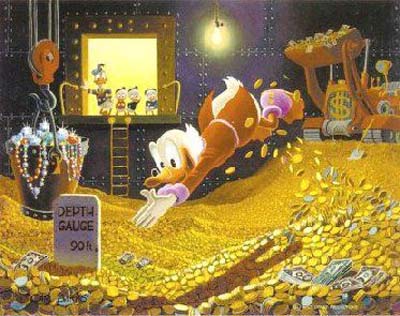
Every time I hear the word greed, I get a mental image. That picture that tickles my brain is, the lovable Scrooge McDuck. I was raised by Duck Tales which is probably one of the greatest cartoon shows ever made. Anyways, Scrooge McDuck was the richest duck in Duckberg,and he always wanted to find a way to make money by finding treasures, investing on factories, and making an island filled with dinosaurs a type of Jurassic Park. In the end, the money didn't make Scrooge happier, it was the love of his beloved nephews, Huey, Dewey, and Louie. He was happy with what he already had. (Duck Tales Intro)

The transformation in the story of King Midas for me was Midas' understanding of greed. He learned that greed can destroy your life the hard way. At the start of the story, he can't stop rambling about money. In the end, he wants to give it all away.

March 14, 2010

Creation


Metamorhposes begins with the very beginning. The book written by Ovid starts with the creation of our planet. They way the creation is described is very similar to the theories of other religions, and some scientists. "Before there was earth or sea or the sky that covers everything, Nature appeared the same throughout the whole world: what we call chaos: a raw confused mass, nothing but inert matter, badly combined discordant atoms of things, confused in the one place." (Book I:1-20 The Primal Chaos). Ovid and the scientists who believe in the Big Bang Theory agree. Scientists believe that before the Big Bang, the whole universe was in one small nugget. What followed is where scientists and Ovid disagree. In the Big Bang, there was a huge explosion (what a surprise), and in Metamorhposes a god created Earth. This part is the one that agrees with many religions such as Catholicism. Catholics believe that God created the universe, just like Ovid.

The beauty of Ovid's theory is that it combines religion and science. "I want to speak about bodies changed into new forms. You, gods, since you are the ones who alter these, and all other things, inspire my attempt, and spin out a continuous thread of words, from the world's first origins to my own time." This is the very first sentence of Metamorhposes, which shows us that Ovid believes in a polytheistic religion. "Earth, heavier than either of these, drew down the largest elements, and was compressed by its own weight. The surrounding water took up the last space and enclosed the solid world." (Book I:21-31 Separation of the elements). Ovid's theory of creation has a term that deals with elements, and makes sense. This is extraordinary because of the book's age. This theory originated thousands of years ago. It has the characteristics of a more recent theory because it combines science and religion.

February 28, 2010

The First Teaching Arjuna's Dejection


The first teaching starts with Sanjaya telling the story of the battle between the Pandu and the Kuru. It seems that the battle is very personal because of what Duryodhana tells his teacher Dona. "My teacher, see the great Pandava army arrayed by Drupada's son, your pupil, intent on revenge."(The Bhagavad-Gita page 23). When revenge is metioned, it is clear that the characters had had a previous encounter that didn't end very well. What follows is a description of the heroes in the battle which reminded me of the Iliad. In the Iliad, Homer is able to depict every hero in detail, and the same happens in Bhagavad-Gita. "Yudhamanyu is bold, and Uttamaujas is brave; the sons of Subhadra and Draupadi all command great chariots."(Bhagavad-Gita page 24). The heroes are introduced with a little background information, and their values.

What follows, is practically a concert. There are roars, trumpets, horns, cymbals, kettledrums, and conches form both sides. They probably did this to intimidate their opponent before starting the battle. Then comes what I believe is the first teaching. Arjuna gives a speech telling the others why fighting would be a huge mistake. "I see omens of chaos, Krishna; I see no good in killing my kinsmen in battle."(Bhagavad-Gita page 27). He is saying that killing is not worth it. They are human beings, and it is wrong to kill others for a cause.

Arjuna speaks about the horror of battle, taking lives. Every time someone is killed in battle, a brother is lost, a father, a cousin. It is sad that men have had to kill each other because of an ambition. War is destroying our race because of what we are doing to each other. Arjuna realizes that taking a human life could devastate him, and his filled with grief that the others are willing to do it. I believe this is the first teaching of the book, because it is the message I took from this chapter.

February 16, 2010

Gilgamesh Tablets VII and VIII

In Tablets VII and VIII, Gilgamesh is filled with grief when Enkidu passed away. This reminds me of what Achilles felt when he had to mourn Patrocul's death. The only difference is that Achilles and Gilgamesh took different actions after their respective companions' deaths. Achilles avenged Patroclus by challenging and killing Hector. Gilgamesh mourned his death and called on to lapidaries to build Enkidu's statue. "Gilgamesh was your friend and companion. Gilgamesh the king has built a statue to celebrate the fame of Enkidu"(Gilgamesh speaking to Enkidu's memory).

February 8, 2010

Gilgamesh Tablet VI

This tablet shows how love can make you do crazy things. One moment, the goddess Ishtar is in love with Gilgamesh's body, and almost immediately after here love declaration, she hates him. Ishtar was filled with rage when Gilgamesh rejected her love and talked about her foulness. Here fury made her want to kill Gilgamesh with the Bull of Heaven, which Gilgamesh managed to defeat with the help of Enkidu. This event also shows the union Gilgamesh and Enkidu have developed. Enkidu fought the Bull of Heaven and insulted a goddess for Gilgamesh. I wish I had friends capable of doing that for me.

Gilgamesh Tablets IV and V

When Gilgamesh and Enkidu were traveling at an incredible speed towards the Cedar Forest, Gilgamesh had some very odd dreams. At first, it seemed that they were heading for death, but Enkidu had a different interpretation of Gilgamesh's dreams. He assured him that they meant positive things would happen. If I were Gilgamesh, I wouldn't have felt so reassured, the dreams showed tragic events, like a mountain falling on top of our heroes, but there are many different ways to interpret dreams. Every person has a different mind that makes the possibilities countless. What also amazed me from these tablets, was the way Gilgamesh and Enkidu defeated Huwawa. Being attacked by thirteen winds sent by a god is not my ideal picture of death. This shows that there was a lot of faith in many gods from a polytheistic religion during the time. Gilgamesh was able to defeat the demon with a prayer.

Gilgamesh Tablets II and III

Enkidu was considered a wild man because he live in peace with nature. After having a sexual relationship with Shamhat, he became an ordinary human being. He was transformed into a "civilized" person. Animals started to fear him, and he started experiencing life as a normal human being. He ate, drank, and stood guard. Then he had a typical human emotion, envy. He was envious of Gilgamesh who Shamhat said was the strongest man, so Enkidu challenged Gilgamesh, and lost. What amazes me is how Enkidu was able to accept defeat and take Gilgamesh as a brother and embark on a quest. Today, very few human beings are able to forgive, and make up so easily. I think that Enkidu acts this way because he hasn't been contaminated by other harmful human emotions such as hate which makes us desire horrible things like vengeance.

February 2, 2010

Introduction

My name is Daniel Ochoa, and I am going to write in my blog about the QUESTions we are exploring. I am also going to write about the different texts we are going to read about.
- How did we get here?
- Who are we?
- Where are we going?
- Why is life miserable for some people and great for others?
- Why are we here?

What is a blog?

A. According to the author, blog is a portmanteau term for the word web log or weblog. In 1999, Peter Merholz split the word into We Blog, and blog was born as a noun and verb.
B. One of the most significant differences between a book and a blog is the power of links. While books have footnotes, they aren't the same as links. With links, bloggers are able navigate different websites much easier than changing pages in a book. Links give blogs a huge advantage over books.
C. Blogs started very small, and started expanding at an incredible rate. At first blogs started with links and very few commentary. Now there are millions of blogs, with all kinds of links and commentary. Today there is a very wide range of topics that blogs cover, from kitchen recepies, to presidential elections.
D. The reason why blogs are so popular is links. No book, newspaper, or magazine allows you to navigate through information like blogs allow you.
E. Of all the topics I could choose for a blog, I would probably pick a blog about movies. I would name it something that attracted people like "Movie Mania!".
F. http://thetoltecpath.wordpress.com/2010/02/02/warriors-of-freedom/
http://peopleandresourcesearth.blogspot.com/2009/12/ishmael-by-daniel-quinn.html
http://ronakmsoni.wordpress.com/2010/01/16/of-talking-gorillas-and-deep-and-subtle-points/